BRCA 1 and BRCA 2 are two of the main genetic diseases thatincrease the risk, by 2/3rds, for the development of breast and ovarian cancer. We can decrease the chances of getting these diseases by early genetic testing, diagnostic monitoring and early detection of the disease by closely monitoring these patients. We can even stop the production of the hormones that cause these devastating cancers by removing the ovaries or breasts.
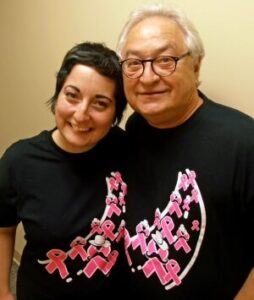 Annie is a 30 year old, unmarried, professional actress who is still not ready to have children. In fact, she is not even sure she will desire to have children; however, she wants to have that option if she chooses do so in the future. Annie’s father was diagnosed with stage 2 breast cancer a few years ago and is a survivor, a very rare incidence. As a result of her father’s diagnosis, genetic testing was done and it concluded that he was positive for the BRCA 2 Gene. Annie was faced with a difficult decision, whether or not to be tested for the gene. Both her and her mother were counseled and given the option to be tested. Annie knew that she had a 50% chance of inheriting the disease from her father. She was counseled about the pros and cons of finding out about the inherited genetic disorder and how early detection is the key for survival. It’s not about the disease diagnosis but about the stage of the disease process that matters. Annie chose to be test and was diagnosed with the BRCA 2 gene, in 2012. As a result, her risk for hormonal cancers increased from a lifetime risk of 1 in 11 to 1 in 3, immediately!
https://www.youtube.com/watch?v=VLl_Vpz3i0E
Upon her diagnosis, Annie was referred to a breast specialist and her options were discussed. She was given the option to be monitored closely with MRIs, Mammograms and breast ultrasounds, every 6 months. Additionally, annual gynecological ultrasounds were also recommended. She was given advice to consider bilateral mastectomy and possible oophorectomy (the removal of her ovaries) to cease the hormonal production that increases her risk of getting cancer. To date, her consistent monitoring has discovered that she remains healthy with NO signs of cancer; however, she lives day-to-day with the knowledge she could be diagnosed, tomorrow. She continues to face difficult decisions, especially because she would like to have the option of having her own children someday. She grieves over the fact that she may need a prophylactic bilateral mastectomy and possible oophorectomy in order to increase her chances of avoiding hormonal cancer, breast and/or ovarian. She has spoken with breast and oncology specialists, as well as, Dr. Ahlering concerning her options for her health future, including her fertility possibilities. Recently, she has been aware of an option to preserve her fertility by removing her eggs or preserving ovarian tissue. This option would allow Annie to freeze her eggs for years and give her the option to have children of her own in the future, especially if she chooses to have the removal of her ovaries; a surgery that may change her life.
Annie is a 30 year old, unmarried, professional actress who is still not ready to have children. In fact, she is not even sure she will desire to have children; however, she wants to have that option if she chooses do so in the future. Annie’s father was diagnosed with stage 2 breast cancer a few years ago and is a survivor, a very rare incidence. As a result of her father’s diagnosis, genetic testing was done and it concluded that he was positive for the BRCA 2 Gene. Annie was faced with a difficult decision, whether or not to be tested for the gene. Both her and her mother were counseled and given the option to be tested. Annie knew that she had a 50% chance of inheriting the disease from her father. She was counseled about the pros and cons of finding out about the inherited genetic disorder and how early detection is the key for survival. It’s not about the disease diagnosis but about the stage of the disease process that matters. Annie chose to be test and was diagnosed with the BRCA 2 gene, in 2012. As a result, her risk for hormonal cancers increased from a lifetime risk of 1 in 11 to 1 in 3, immediately!
https://www.youtube.com/watch?v=VLl_Vpz3i0E
Upon her diagnosis, Annie was referred to a breast specialist and her options were discussed. She was given the option to be monitored closely with MRIs, Mammograms and breast ultrasounds, every 6 months. Additionally, annual gynecological ultrasounds were also recommended. She was given advice to consider bilateral mastectomy and possible oophorectomy (the removal of her ovaries) to cease the hormonal production that increases her risk of getting cancer. To date, her consistent monitoring has discovered that she remains healthy with NO signs of cancer; however, she lives day-to-day with the knowledge she could be diagnosed, tomorrow. She continues to face difficult decisions, especially because she would like to have the option of having her own children someday. She grieves over the fact that she may need a prophylactic bilateral mastectomy and possible oophorectomy in order to increase her chances of avoiding hormonal cancer, breast and/or ovarian. She has spoken with breast and oncology specialists, as well as, Dr. Ahlering concerning her options for her health future, including her fertility possibilities. Recently, she has been aware of an option to preserve her fertility by removing her eggs or preserving ovarian tissue. This option would allow Annie to freeze her eggs for years and give her the option to have children of her own in the future, especially if she chooses to have the removal of her ovaries; a surgery that may change her life.
 The MCRM Fertility (MCRM), through the Institute for Fertility Preservation and medical director, Peter Ahlering, MD, is working hard to advance awareness of the advancements in the science and success related to fertility preservations. Recently, Dr. Ahlering spoke to a group of practitioners and breast care specialists to discuss the importance and methodology of fertility preservation. Modern technology has given us the tools to change the course of lives that are threatened with loosing fertility. As we continue to be able to diagnose cancer in early stages we are increasing the survival rates in millions of cancer patients, each year. We also have the technology to predict the higher risk patients that could be diagnosed with cancer due to genetic flaws that we are born with. Under the direction of Dr. Peter Ahlering, Annie has a different opinion on her future and fertility options. She has been given a reason to know she can live a normal life with a decreased risk for dying from this devastating genetic disease. We all have one thing in common, we are eventually all terminal. We must focus on our lifetime quality, we cannot control quantity in many situations. Early detection of a disease process is the key to providing patients with the best chances to be diagnosed early of diseases, change the course of disease process and have the upmost quality of life available. Dr. Ahlering offers hope to so many by offering this simple, minimally invasive procedure at MCRM.
Susan Gaffney, WHNP-BC]]>
The MCRM Fertility (MCRM), through the Institute for Fertility Preservation and medical director, Peter Ahlering, MD, is working hard to advance awareness of the advancements in the science and success related to fertility preservations. Recently, Dr. Ahlering spoke to a group of practitioners and breast care specialists to discuss the importance and methodology of fertility preservation. Modern technology has given us the tools to change the course of lives that are threatened with loosing fertility. As we continue to be able to diagnose cancer in early stages we are increasing the survival rates in millions of cancer patients, each year. We also have the technology to predict the higher risk patients that could be diagnosed with cancer due to genetic flaws that we are born with. Under the direction of Dr. Peter Ahlering, Annie has a different opinion on her future and fertility options. She has been given a reason to know she can live a normal life with a decreased risk for dying from this devastating genetic disease. We all have one thing in common, we are eventually all terminal. We must focus on our lifetime quality, we cannot control quantity in many situations. Early detection of a disease process is the key to providing patients with the best chances to be diagnosed early of diseases, change the course of disease process and have the upmost quality of life available. Dr. Ahlering offers hope to so many by offering this simple, minimally invasive procedure at MCRM.
Susan Gaffney, WHNP-BC]]>