sperm concentration can have a very high variation within any given male, as much as 30% from specimen to specimen. Additionally, motility can also vary significantly; as much as, 15% to 20%. It is also widely misconstrued what is “normal” with the sperm count. The lower limit of normal (the 5th percentile of the population) of the sperm concentration is around 15 to 20 million per cc whereas the 50th percentile, is 73 million per cc. Thus, the 50 th percentile is closer to “normal” not 20 million. We start to see significant lower probability of spontaneous conception when, in fact, the sperm concentration falls below 40 million per cc.
“Normal” motility in the conventional semen analysis, the 50th percentile, is about 80% whereas the 5th percentile is around 58%. Thus, “normal” is not in the 50% range.
The forward progressive motility also is an important measure that needs to be undertaken, not just the total motility or vitality. The progressive motility at the lower limit of normal (5th percentile) is 32% whereas the average (50th percentile) is 55% forward progressive motility. Obviously, that is a significant difference and is critical in understanding fertility implications when looking at semen analysis results.
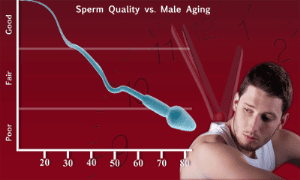 Due to the known variations of the parameters of a traditional semen assessment, one only including count and motility, the testing is just not adequate to properly evaluate male factor fertility potential. As a result, an evaluation of morphology should also be completed. Done properly, the morphology tends to show the least variability and this is critical as the morphology is a reflection of “quality”. Therefore, strict morphologic assessment is important to reduce the variability seen between individuals and within the same individual. In addition, when strict morphologic assessments are utilized one can use the assessment as a predictor of male fertility potential. An excellent study, in the
  New England Journal of Medicine, in 2001, showed that, relatively speaking, the morphology is the single most important predictor of fertility potential with intrauterine insemination (IUI) and thus it is vital for the basic analysis (count/motility) and conventional analysis so its importance should not be minimized.
Advanced semen analysis testing with morphology is important and useful in providing a predictor of male fertility potential; however, many sperm dysfunctions remain untested by this routine semen analysis. Assessment of oxidative stress and sperm DNA integrity (DNA damage) can have a significant impact on qualitative semen parameters and as such natural conception and IUI outcome.
So, it is critical to have, not only the basic conventional analysis with morphology undertaken, but also assessments of DNA damage, as it has a significant impact on time to conception and pregnancy probability in the context of natural conception or IUI. DNA fragmentation (DFI) or qualitative assessments are required to provide an adequate assessment of the male factor.
Again, when there are problems with count, concentration, motility/vitality as well as morphology and forward progressive motility, one will see a much higher probability of DNA damage or DNA fragmentation. Thus, again, it is important to have a global perspective of semen testing and look at all of these parameters when understanding the impact on fertility potential.
MCRM Fertility has been doing magnified semen analysis with strict morphology and DNA Fragmentation testing for many years and unquestionably we have focused on how to translate this into improved pregnancy outcomes, especially in the context of IVF and intrauterine insemination protocols.
If you have been trying to conceive with difficulties are have reached an impasse or been told you have “ Unexplained Infertility”, it is time to evaluate the male fertility factor in more detail. Contact MCRM Fertility, today, to schedule a thorough semen analysis and/or DNA Fragmentation test.
If you have additional questions or needs please don’t hesitate to contact myself at, [email protected]. I and the entire MCRM Fertility team look forward to assisting you in making your dreams come to life.
Peter M. Ahlering
Medical Director]]>
New England Journal of Medicine, in 2001, showed that, relatively speaking, the morphology is the single most important predictor of fertility potential with intrauterine insemination (IUI) and thus it is vital for the basic analysis (count/motility) and conventional analysis so its importance should not be minimized.
Advanced semen analysis testing with morphology is important and useful in providing a predictor of male fertility potential; however, many sperm dysfunctions remain untested by this routine semen analysis. Assessment of oxidative stress and sperm DNA integrity (DNA damage) can have a significant impact on qualitative semen parameters and as such natural conception and IUI outcome.
So, it is critical to have, not only the basic conventional analysis with morphology undertaken, but also assessments of DNA damage, as it has a significant impact on time to conception and pregnancy probability in the context of natural conception or IUI. DNA fragmentation (DFI) or qualitative assessments are required to provide an adequate assessment of the male factor.
Again, when there are problems with count, concentration, motility/vitality as well as morphology and forward progressive motility, one will see a much higher probability of DNA damage or DNA fragmentation. Thus, again, it is important to have a global perspective of semen testing and look at all of these parameters when understanding the impact on fertility potential.
MCRM Fertility has been doing magnified semen analysis with strict morphology and DNA Fragmentation testing for many years and unquestionably we have focused on how to translate this into improved pregnancy outcomes, especially in the context of IVF and intrauterine insemination protocols.
If you have been trying to conceive with difficulties are have reached an impasse or been told you have “ Unexplained Infertility”, it is time to evaluate the male fertility factor in more detail. Contact MCRM Fertility, today, to schedule a thorough semen analysis and/or DNA Fragmentation test.
If you have additional questions or needs please don’t hesitate to contact myself at, [email protected]. I and the entire MCRM Fertility team look forward to assisting you in making your dreams come to life.
Peter M. Ahlering
Medical Director]]>