It is a very common situation that we run in to where we have moderate to severemale factor infertility. By definition, a moderate to severe male factor is a very low count and motility on a traditional semen analysis; this would not be qualitative abnormalities such as DNA Fragmentation but simply a quantitative determination.
90% of the time, moderate to severe male factor is due to testicular dysfunction and often associated with low testosterone levels in the men. In many cases, medications can be utilized to increase sperm count, motility and testosterone.
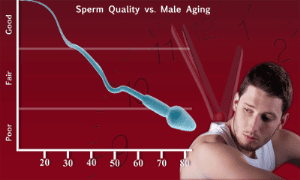
 The significant thing to understand is that when there is significant low count and motility on a basic semen analysis, again indicative of basic testicular dysfunction, the overall issues are likely to continue to decline over time. Even in young men, you can expect that there will be a further decline in count and motility as he ages. Also, there will be a decline of testosterone levels at some point. So, these things need to be consistently monitored.
Of more importance is for one to consider the fact that whatever treatment is used to achieve a current pregnancy with moderate or severe male factor, one can expect that future pregnancies are going to be potentially more difficult to achieve. Thus, the preservation of present sperm for future pregnancies would be of significant importance and interest for the majority of men . Sperm banking is a subject that I recommend men should consider discussing with their physician(s) and potentially plan for. Sperm banking for personal use is a common, low-cost and simple practice commonly performed at MCRM. We also, of course, provide egg banking for similar reasons for females that need to preserve fertility.
It is vital to understand that declining testosterone and sperm levels necessitate a proactive discussion and planning for future fertility if males wish to have this maintained. Taking testosterone is not helpful to manage fertility issues, in fact it is contradictive! Testosterone supplementation actually suppresses further sperm production.
To learn more about male of female fertility preservation, simply request a consultation with myself, today.
Peter Ahlering, M.D.]]>
The significant thing to understand is that when there is significant low count and motility on a basic semen analysis, again indicative of basic testicular dysfunction, the overall issues are likely to continue to decline over time. Even in young men, you can expect that there will be a further decline in count and motility as he ages. Also, there will be a decline of testosterone levels at some point. So, these things need to be consistently monitored.
Of more importance is for one to consider the fact that whatever treatment is used to achieve a current pregnancy with moderate or severe male factor, one can expect that future pregnancies are going to be potentially more difficult to achieve. Thus, the preservation of present sperm for future pregnancies would be of significant importance and interest for the majority of men . Sperm banking is a subject that I recommend men should consider discussing with their physician(s) and potentially plan for. Sperm banking for personal use is a common, low-cost and simple practice commonly performed at MCRM. We also, of course, provide egg banking for similar reasons for females that need to preserve fertility.
It is vital to understand that declining testosterone and sperm levels necessitate a proactive discussion and planning for future fertility if males wish to have this maintained. Taking testosterone is not helpful to manage fertility issues, in fact it is contradictive! Testosterone supplementation actually suppresses further sperm production.
To learn more about male of female fertility preservation, simply request a consultation with myself, today.
Peter Ahlering, M.D.]]>